
Bedside assessment
Simple PVD assessment in primary-care settings.
A bedside module to support early detection and assessment of peripheral arterial disease using objective vascular measurements.
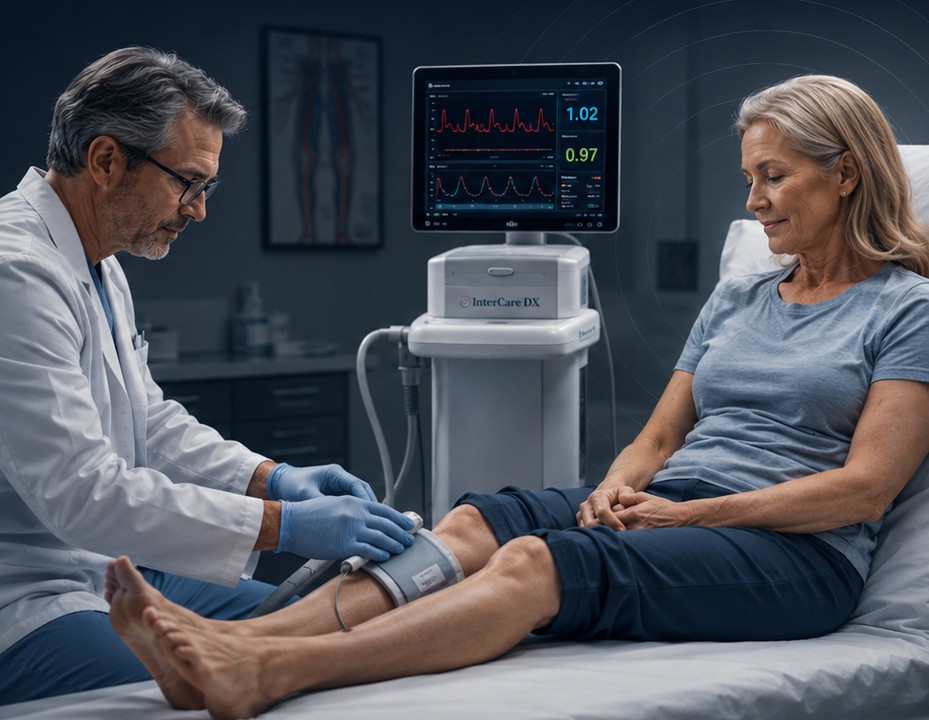
Leg pain is an everyday problem for tens of thousands of patients. The pain is often a result of Peripheral Vascular Disease, a circulatory condition caused by damage or blockage of blood vessels in the legs.
The InterCare Vascular Diagnostic Center provides the PADogram procedure as a very simple test to assist in the assessment of PVD at the patient’s bedside, without the need for a certified ultrasound technician in attendance, in a primary care setting.
Patients may be referred for more specific diagnostic studies such as Color-flow Doppler or arteriogram if the PADogram study is positive. Patients who complain of numbness and tingling, coldness, leg pain during walking or sores that do not heal are ideal candidates.
The PADogram uses pressure measurements to determine the anatomic localization of blood vessel blockage in three separate areas: the Aortoiliac/proximal superficial femoral artery, distal superficial femoral artery and tibial vessels.
The old screenshot-style material has been translated into clean cards, flows and data panels so users can read the product value clearly.
Simple PVD assessment in primary-care settings.
Supports patients with leg pain, numbness, coldness or non-healing sores.
Identifies likely blockage regions using pressure measurements.
Positive studies can support referral for Doppler or arteriogram.
PDFs, forms, brochures, FDA documentation and publications are available for customer review.